Tools to apply glass veil: by hand, banjo or dispenser
Team VELOBOX · Last updated 10 July 2026 · 9 min read
Which tool do you need to apply glass veil on drywall? A practical comparison of hand method, banjo, mesh applicators and a belt dispenser.
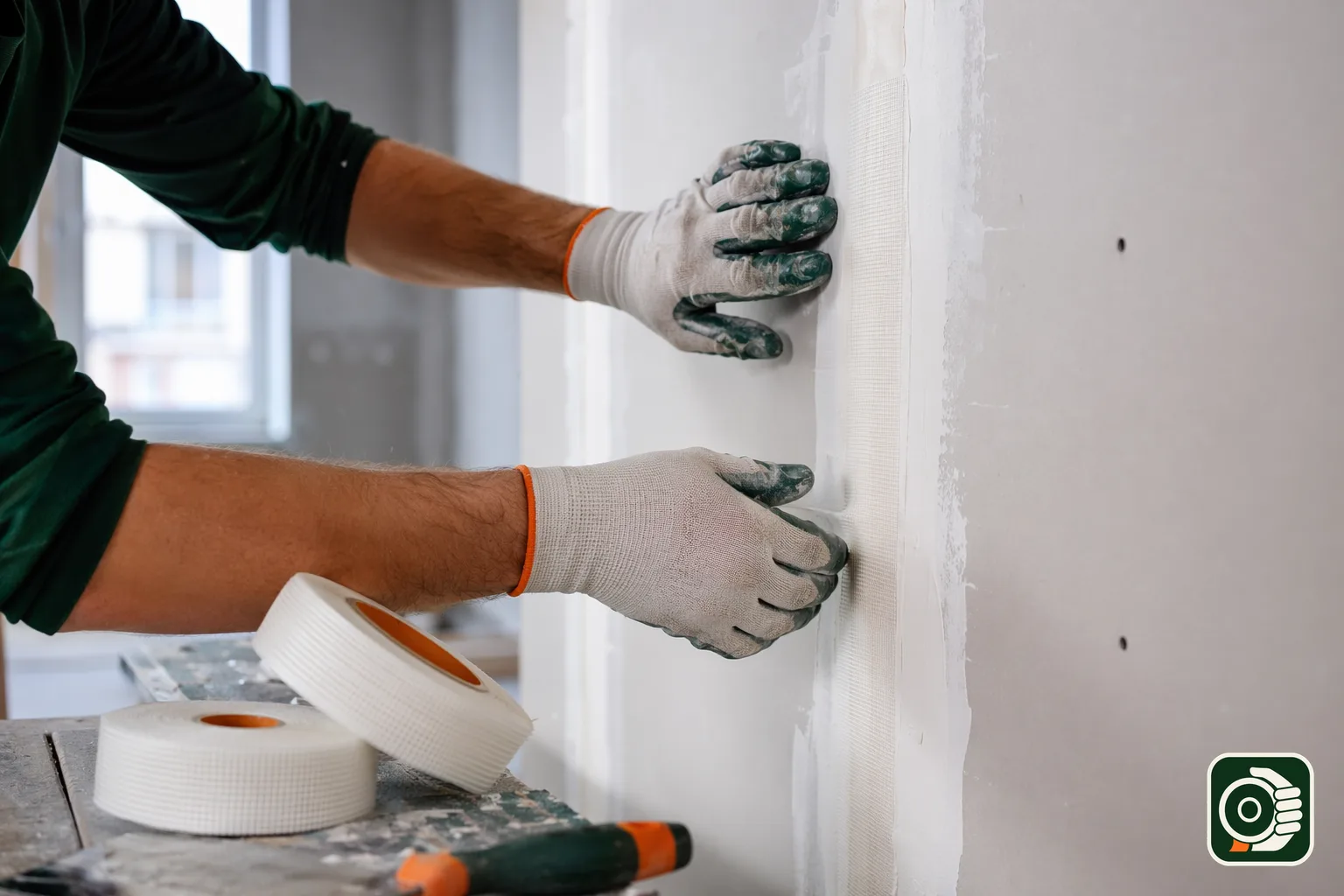
To apply glass veil on drywall joints the most common method is still the roll unrolled by hand, cut with scissors or a utility knife. The banjo — the tool many look for to speed up jointing — does not load glass veil: it is made for paper tape. To go faster on glass veil the way is a portable dispenser that unrolls, tensions and cuts with one hand.
In this guide we compare the tools and methods for applying glass veil on drywall — by hand, banjo, mesh applicators, belt tape reel and a dedicated dispenser — against the criteria that matter on site: one hand or two, cutting, compatible materials, cost and speed.
In short
- Glass veil does not load into the banjo: that tool is for paper tape + compound.
- By hand works, but it is two-handed and loses time on tension, centring and cutting.
- Mesh applicators (integrated blade) and belt tape reels each solve half the problem.
- A one-handed dispenser combines belt mounting, integrated cutting and glass-veil compatibility.
Which tools you really need for glass veil
The question “what tool do you apply glass veil with?” comes from a common misunderstanding: many think the banjo, the symbol tool of fast jointing, is good for everything. It is not. Glass veil is a non-woven glass fibre web that is bedded into fresh compound, while the banjo is built around paper tape.
There are four families of solutions, each born for a different problem: the hand method, the banjo/bazooka, the mesh applicators with a blade, and the belt tape reels. To these is added the dedicated portable dispenser, the most recent category. Let us look at them one by one, then put them in a table.
By hand: roll, scissors or utility knife (everyone’s method)
Applying glass veil by hand is the starting method: it costs nothing in tools and is done with what every drywall finisher already has in their pocket. You spread the first bed of compound, unroll the veil to the length of the joint, centre it, tension it and cut it with scissors or a knife before embedding it with the knife.
The limit is not the single motion, but its repetition. You need one hand to hold the roll and one to cut, so you never keep the knife ready. The tape tends to curl, get dusty and fray on the freehand cut. On a few joints it is perfect; over a day of walls and ceilings, the seconds lost on each length become minutes and then hours. The correct procedure is described in the guide on how to apply glass veil on drywall joints.
The banjo (and the bazooka): why they do not apply glass veil
The banjo is the first tool that comes to mind when speeding up joints, but it is designed for another material. It loads a roll of paper tape and a reserve of compound, and lays them together in a single pass: the paper comes out already impregnated, ready to smooth. The bazooka further automates the same principle on long joints.
The point is exactly this: neither the banjo nor the bazooka loads glass veil. They are tuned to paper tape and compound; glass fibre veil is laid dry and then embedded, with a different logic. That is why those looking for “the banjo for glass veil” hit a dead end. They are valid tools, but for paper — and the professional models remain bulky, heavier and more expensive, generally around 170–250 euros. On the joint finishing level, from Q1 to Q4, the reference is the drywall finishing levels, regardless of the tool used.
Mesh applicators with an integrated blade
A second family are the mesh tape applicators, such as the MARSHALLTOWN models or the common “fixline” applicators. They have the advantage the hand method lacks: an integrated cutting blade, often triggered by a button or a wheel, and a guide that helps lay the tape straight, even on internal corners.
Two limits remain for those laying glass veil. First, they are used two-handed: one grips the applicator, the other guides the tape, so they do not free the operator like a belt mount. Second, they are meant mostly for self-adhesive mesh tape on joints, not for the wide glass veil to be embedded. They are excellent in their field, but cover a different material: to understand the differences between the reinforcements, see the comparison of glass veil, mesh and paper tape.
The belt tape reel: hands free, but no cut
The belt tape reels (the “tape reel” type such as ToolPro) solve the opposite problem. They clip the roll to the operator’s belt and keep it always to hand: you unroll with one hand while working, without bending down to pick the roll off the floor. On ladders and scaffolds, having the tape on you makes a concrete difference.
What they do not do is cut: the tape tears by hand from the slot, with irregular edges, or you still need the scissors. On top of that they are born for standard joint tape, not for glass veil. They free the hands, but leave open the problem of the clean cut and constant tension — the two motions where by hand you lose the most time and make the most mistakes.
The one-handed portable dispenser (VELOBOX)
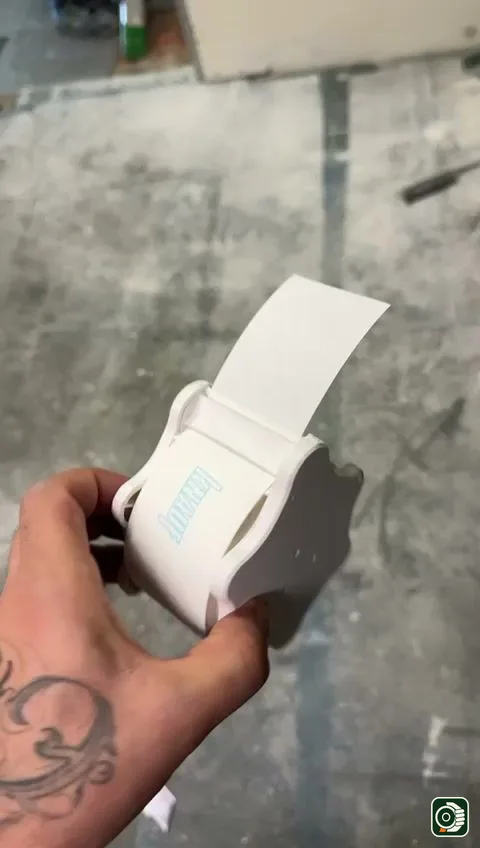
The dedicated portable dispenser is the category that unites the scattered pieces of the others. VELOBOX was born from a drywall finisher to apply glass veil with one hand only: it clips to the belt like a tape reel, keeps the tape at constant tension and centres it on the joint, and integrates a plastic cutting fin to sever the length without changing tool. The blade is not metal, so it does not cut skin and does not corrode on site.
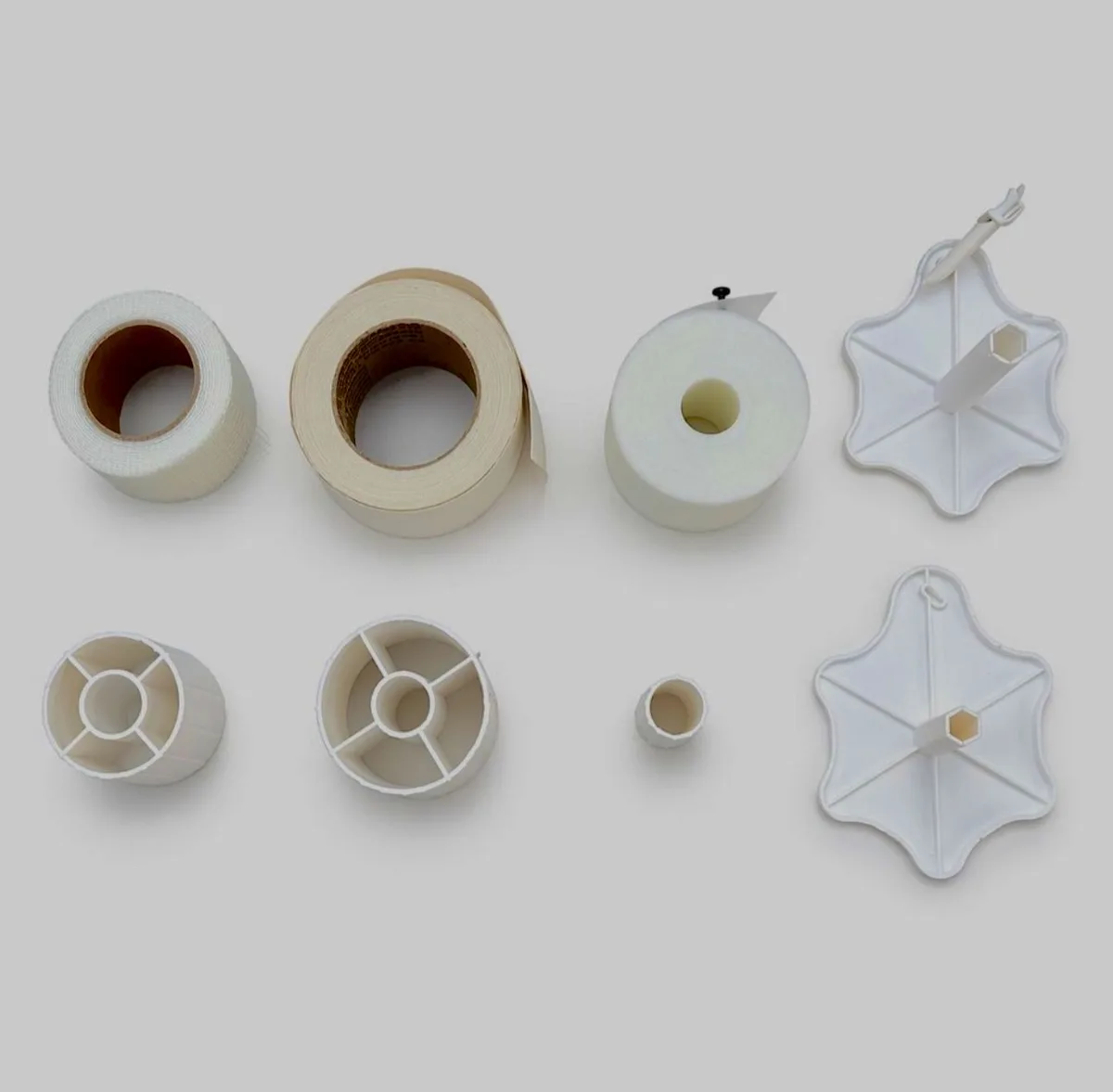
The difference from mesh applicators is multi-material compatibility: three interchangeable adapters — glass veil, paper tape and reinforcing mesh — mount on the axle in seconds, without tools. To date it is the only dispenser designed also for glass veil, the material the banjo and mesh applicators do not load. VELOBOX has a filed patent application (no. 102026000013465, UIBM) and is in pre-launch; based on our internal tests it cuts the laying time by up to 40% versus the manual method, especially on repetitive jobs where the micro-times multiply.
Glass veil tools compared
Comparing the five approaches on the dimensions that matter on site, no traditional method covers them all: each solves part of the problem, while the dedicated dispenser puts them together.
| Tool | Glass veil | Indicative cost | When it is worth it |
|---|---|---|---|
| By hand | Yes | Almost zero | Few joints, occasional work |
| Banjo / bazooka | No (paper only) | High (170–250 €) | Lots of paper on long joints |
| Mesh applicator | Limited | Medium (~40 €) | Self-adhesive mesh tape |
| Belt tape reel | Yes | Low | Hands free, hand cutting |
| Dedicated dispenser (VELOBOX) | Yes | Low | Glass veil on repetitive jobs |
← scorri per vedere tutto →
From the site In our experience, the time on site is not lost in spreading the compound, but in the motions around the tape: picking up the roll, tensioning it, centring it, cutting it and starting again. It is the sum of these micro-times, repeated over dozens of joints, that decides how many linear metres you close in a day.
Which tool to choose based on the job
The choice depends on the type of job, not on the most expensive tool. Here is a quick guide:
- Few joints, occasional work → hand method: zero investment, just a knife and a taping knife.
- Lots of paper tape on long joints → the banjo makes sense, but only for paper.
- Self-adhesive mesh tape on repairs → a mesh applicator with an integrated blade.
- You want hands free on ladders and scaffolds → a belt tape reel, accepting hand cutting.
- Glass veil on repetitive jobs, one hand, clean cut → a dedicated dispenser like VELOBOX.
Whatever tool you choose, the final quality always depends on technique: clean substrate, the right compound for the phase and well-bedded tape. The tool cuts the dead time and makes the motion more consistent, but it does not replace the operator’s hand. For the correct steps see the VELOBOX instructions.
Frequently asked questions
What is the best tool to apply glass veil on drywall? It depends on the job. For a few joints a roll by hand with a utility knife is enough. For repetitive work a portable dispenser that unrolls, tensions and cuts with one hand is worth it: it is the only dispenser also designed for glass veil, because the banjo and mesh applicators do not load it.
Can you use a banjo to apply glass veil? No. The banjo (and the bazooka) are designed to lay paper tape together with compound in a single pass: they load paper tape, not glass fibre veil. For glass veil the options remain the hand method or a dedicated dispenser.
Do you really need a tool or is applying glass veil by hand enough? By hand is possible, but you work two-handed and lose time tensioning, centring and cutting each length. On a few joints it is fine; on walls, ceilings and repetitive bulkheads a one-handed dispenser cuts the dead time and makes the laying more consistent.
What is the difference between a belt tape reel and a mesh applicator? The belt tape reel frees the hands but does not cut: tearing stays manual. The mesh applicator has an integrated blade but is used two-handed and is meant for self-adhesive mesh tape. A dispenser like VELOBOX combines belt mounting, one-handed use and integrated cutting across several materials.
Want to try VELOBOX first on your glass veil joints? Join the waitlist.
Related articles
- Glass veil, paper tape or mesh: which drywall joint tape to use Glass veil, paper tape or fibreglass mesh? A practical comparison of drywall joint tapes: pros, cons and which one to use where.
- How to apply glass veil on drywall joints How to apply glass veil on drywall joints: the 5 correct steps, the tools and the mistakes to avoid for a crack-free skim finish.
- Fiberglass drywall tape (glass veil): what it is, weight and sizes What fiberglass drywall tape (glass veil) is: a non-woven glass fibre web that reinforces drywall joints. Weight, width, roll sizes and how to apply it.
Apply the tape faster with VELOBOX
Join the waitlistAre you a reseller or distributor? Discover the dealer programme →